

DIGITAL INNOVATIONS 
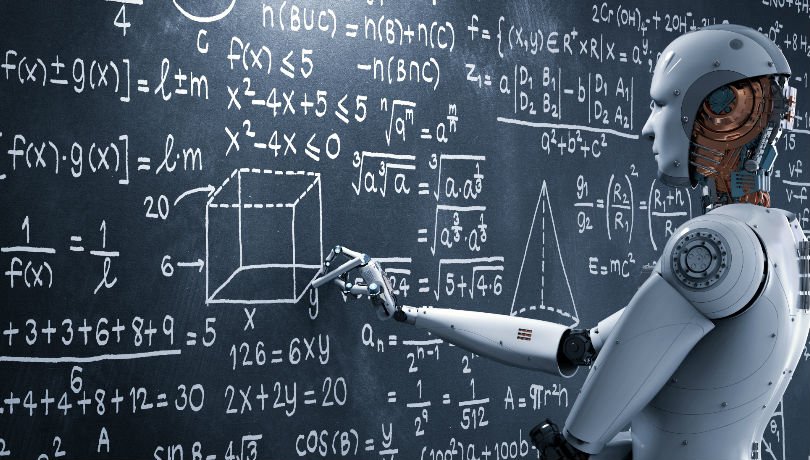
Artificial intelligence (AI) is an area of computer science that emphasizes the creation of intelligent machines that work and react like humans. Some of the activities computers with artificial intelligence are designed for include:
- Speech recognition
- Learning
- Planning
- Problem solving
Machine learning (ML) is the scientific study of algorithms and statistical models that computer systems use to effectively perform a specific task without using explicit instructions, relying on patterns and inference instead. In other words, it creates the ability to automatically learn and improve from experience without being specifically programmed. Some of the common applicability of ML are:
- Self-driving car and automated transportation
- Managing/ handling jobs which are dangerous to humans
- Enhanced healthcare
- Streamlined logistics & distribution
- Industrial usage
- Predictive analysis, etc.
Deep learning is a class of machine learning algorithms that use a cascade of multiple layers of nonlinear processing units for feature extraction and transformation. Each successive layer uses the output from the previous layer as input. It learn in supervised (e.g., classification) and/or unsupervised (e.g., pattern analysis) manners. It learns multiple levels of representations that correspond to different levels of abstraction; the levels form a hierarchy of concepts. In other words. Deep Learning is a subfield of machine learning concerned with algorithms inspired by the structure and function of the brain called artificial neural networks.
Internet of Things is a network of devices, equipments, machines, home appliances, cellphones, sensors and many more connected together to internet using API and connectors and share the data. Few real world application of IOT are:
- Smart homes
- Wearables like i-watch
- Industrial Internet (IIoT)
- Smart Farming
- Smart Cities, etc.